How to Ripen Bananas for Banana Bread: Fast & Natural Methods

How to ripen bananas for banana bread involves using natural methods like paper bags or quick techniques such as oven heating to achieve the perfect yellow-with-brown-spots ripeness level. The best bananas for banana bread are overripe with soft texture and high sugar content, which develops through natural starch-to-sugar conversion during ripening. Whether you need bananas ready in minutes or can wait days, multiple proven methods can transform firm green bananas into perfect baking ingredients.
Overripe bananas create superior banana bread because their increased sweetness and softer texture blend seamlessly into batter. Natural ripening takes 2-7 days on the counter, while accelerated methods like paper bag ripening or oven heating at 300°F can achieve similar results much faster. Understanding these techniques ensures you’ll never miss a banana bread opportunity due to unripe fruit.
The key lies in recognizing proper ripeness indicators and choosing the right method for your timeline. Both natural ethylene gas production and controlled heat application trigger the same biochemical processes that make bananas perfect for baking.
TL;DR
- Natural ripening: Place bananas in paper bags with apples for 2-3 days, or leave on counter for 5-7 days
- Quick oven method: Bake at 300°F for 15-20 minutes until skin darkens and fruit softens
- Perfect ripeness: Yellow skin with brown spots or fully brown exterior with soft, sweet interior
- Microwave option: Puncture skin and heat 30-60 seconds for emergency ripening
Understanding Banana Ripeness for Banana Bread
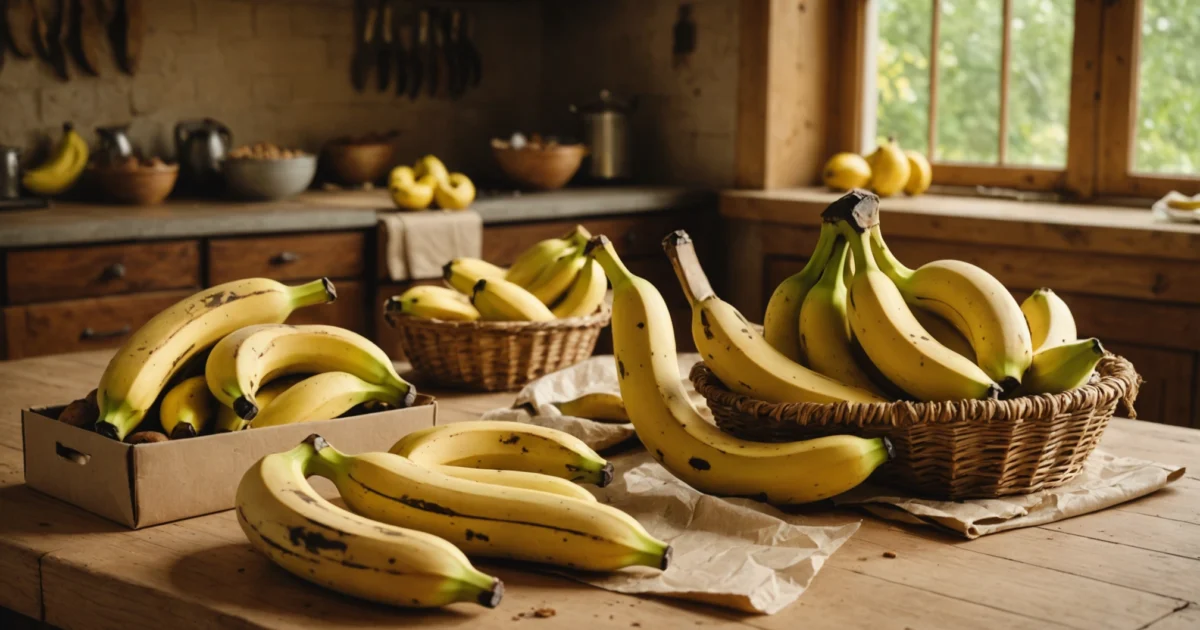
Perfect banana bread starts with understanding the ideal ripeness level that transforms ordinary bananas into exceptional baking ingredients. The optimal bananas for banana bread display yellow skin with brown spots or progress to fully brown exterior with soft, yielding flesh underneath. These visual markers indicate the fruit has reached peak sweetness and optimal texture for baking applications.
Overripe bananas work best for banana bread because their higher sugar content and softer texture create superior flavor and moisture in the finished product. Additionally, the natural breakdown of cellular structure during ripening allows bananas to mash easily and distribute evenly throughout batter. Consequently, bakers achieve better texture and enhanced sweetness without adding extra sugar.
Visual and Tactile Indicators of Perfect Banana Bread Bananas
Recognizing the perfect banana for baking requires attention to both visual appearance and physical texture. Yellow bananas with brown spots represent the minimum ripeness level, while fully brown or black-skinned bananas offer maximum sweetness and easiest mashing. Furthermore, the fruit should yield to gentle pressure without being mushy or liquid inside.
- Skin color: Yellow with brown spots to completely brown or black
- Texture: Soft to touch but not leaking or overly mushy
- Aroma: Sweet, fruity smell without fermentation odors
- Interior: Creamy, easily mashable flesh with natural sweetness
The tactile test reveals banana readiness more accurately than visual inspection alone. Moreover, perfectly ripe bananas for baking should feel soft when gently squeezed but maintain structural integrity when peeled. Bananas that leak juice or smell fermented have passed optimal ripeness for banana bread baking.
The Science Behind Starch-to-Sugar Conversion During Ripening
The ripening process transforms bananas through enzymatic starch-to-sugar conversion that dramatically improves their baking properties. Green bananas contain approximately 20-25% starch and minimal sugar, while fully ripe bananas reverse this ratio to contain 16-17% sugar and less than 1% starch. This biochemical transformation occurs through the action of amylase enzymes that break down complex starches into simple sugars.
Ripening Chemistry
Ethylene gas production accelerates this natural conversion process and explains why bananas ripen faster when grouped together or placed with other ethylene-producing fruits. Meanwhile, the breakdown of pectin and cellulose in cell walls creates the soft texture that makes overripe bananas ideal for mashing and incorporating into batter. Temperature also affects ripening speed, with warmer conditions accelerating enzymatic activity.
Understanding this scientific process helps bakers predict ripening timelines and choose appropriate acceleration methods. Specifically, the starch-to-sugar conversion peaks when banana skins show significant browning, indicating maximum sweetness development. At this stage, bananas provide optimal flavor enhancement and natural moisture for exceptional banana bread results.
Natural Ripening Methods
Natural ripening methods harness the banana’s inherent ethylene production to achieve optimal sweetness and texture for banana bread baking. Counter ripening represents the most straightforward approach, requiring 2-7 days depending on the banana’s initial ripeness level. Green bananas typically need the full week, while yellow bananas with minimal spotting ripen within 2-3 days at room temperature.
The paper bag method accelerates natural ripening by trapping ethylene gas around the bananas. This concentrated ethylene exposure speeds the starch-to-sugar conversion process by approximately 50% compared to open-air ripening. Simply place bananas in a brown paper bag, fold the top loosely, and store at room temperature for faster results.
Adding ethylene-producing fruits to the paper bag creates an even more effective ripening environment. Apples and avocados generate high levels of ethylene gas that boost banana ripening speed significantly. One ripe apple placed with green bananas can reduce ripening time from seven days to four days. Similarly, a ripe avocado produces enough ethylene to accelerate banana ripening by 2-3 days.
Warm location placement provides another natural acceleration technique without compromising banana quality. Temperatures between 68-75°F optimize enzymatic activity while preventing premature spoilage. Ideal warm locations include the top of refrigerators, sunny windowsills, or near heating vents. However, temperatures above 80°F can cause uneven ripening and potential fruit damage.
Pro Tip
Natural ripening preserves the banana’s cellular structure better than artificial methods, resulting in superior texture for banana bread baking. Furthermore, naturally ripened bananas develop more complex flavor compounds through gradual enzymatic processes. The slower conversion allows for better sugar distribution throughout the fruit, creating consistent sweetness in the final baked product.
Monitor banana progress daily when using natural ripening methods to prevent over-ripening. Bananas reach optimal banana bread readiness when the skin shows brown spots covering 60-70% of the surface. At this stage, the fruit yields slightly to gentle pressure while maintaining structural integrity for easy peeling and mashing.
Fast Ripening Techniques
When time constraints require immediate banana ripening, several artificial methods can transform green bananas into baking-ready fruit within minutes. These fast ripening techniques use controlled heat application to accelerate enzymatic processes that normally take days. However, each method produces different textural and flavor outcomes compared to natural ripening processes.
Oven Ripening Method
The oven method provides the most reliable artificial ripening technique for banana bread preparation. Preheat your oven to 300°F and place unpeeled bananas on a parchment-lined baking sheet. Bake for 15-20 minutes until the skin darkens significantly and yields to gentle pressure.
This controlled heating process converts starches to sugars while softening the fruit’s cellular structure. The banana skin acts as a natural steaming chamber, preventing moisture loss during the ripening acceleration. Monitor bananas closely after 15 minutes to prevent over-softening that could compromise texture for banana bread baking.
Microwave Technique
Microwave ripening offers the fastest artificial method, requiring only 30-60 seconds of heating time. Pierce the banana skin with a fork in multiple locations to prevent bursting from internal steam pressure. Place the punctured banana on a microwave-safe plate and heat in 15-second intervals.
This rapid heating method works by exciting water molecules within the banana, creating internal heat that accelerates enzymatic activity. However, microwave ripening often produces uneven results with some areas becoming overly soft while others remain firm. The technique works best for bananas that are already showing early signs of natural ripening.
Air Fryer Method
Air fryer ripening combines controlled heat with air circulation for more even results than microwave methods. Set the air fryer to 350°F and cook unpeeled bananas for 3-5 minutes. The circulating hot air creates uniform heating that prevents the hot spots common in microwave ripening.
This method produces results similar to oven ripening but requires less time and energy. The concentrated heat environment accelerates sugar development while maintaining better texture integrity than microwave techniques. Check banana softness every 2 minutes to achieve optimal ripeness without over-processing.
Pros
- Oven method produces most consistent results
- Air fryer creates even heating distribution
- Microwave offers fastest ripening time
- All methods work within 20 minutes maximum
Cons
- Artificial methods reduce complex flavor development
- Quick ripening can create mushy texture
- Heat application may cause uneven sugar distribution
- Natural ripening produces superior banana bread quality
Quick ripening methods sacrifice some flavor complexity for time efficiency. Natural ripening allows gradual enzymatic processes to develop nuanced sweetness and optimal texture. Artificially ripened bananas often lack the deep, rich flavor that develops through slower natural processes.
Furthermore, rapid heating can break down cellular structures too quickly, resulting in overly soft bananas that may create dense, gummy banana bread. Natural ripening preserves fruit integrity while developing the ideal balance of sweetness and texture for superior baking results.
Step-by-Step Ripening Instructions
Each ripening method requires specific techniques to achieve optimal results for banana bread. Following precise temperature and timing guidelines ensures your bananas develop the perfect sweetness and texture. These detailed instructions help you ripen bananas safely while preserving their natural flavor profile.
Oven Ripening Method
Preheat your oven to 300°F (150°C) for consistent, gentle heating that mimics natural ripening processes. Place unpeeled bananas on a parchment-lined baking sheet, ensuring adequate spacing between each fruit. This temperature prevents scorching while activating enzymatic reactions that convert starches to sugars.
Bake the bananas for 15-20 minutes depending on their initial ripeness level. Green bananas require the full 20 minutes, while yellow bananas with minimal brown spots need only 15 minutes. The controlled heat environment breaks down cellular walls gradually, creating the soft texture ideal for mashing.
Allow oven-ripened bananas to cool for 5-10 minutes before handling. The fruit continues ripening during this cooling period as internal heat distributes evenly. This resting phase prevents burns while ensuring complete sugar development throughout the banana flesh.
Paper Bag Ripening Technique
Place 3-5 bananas inside a brown paper bag with one ripe apple or tomato to accelerate the process. These fruits release ethylene gas naturally, which triggers ripening hormones in nearby bananas. Fold the bag loosely to trap ethylene while allowing minimal air circulation.
Store the sealed bag at room temperature (68-72°F) away from direct sunlight and heat sources. Check the bananas every 12-24 hours to monitor progress and prevent over-ripening. This method typically produces perfectly ripe bananas within 1-3 days depending on initial fruit maturity.
Expect yellow bananas to develop brown spots within 24-48 hours using this technique. Green bananas require 2-3 days to reach optimal ripeness for baking. The gradual process preserves fruit integrity while developing complex flavors that enhance banana bread taste.
Microwave Ripening Safety
Pierce banana peels with a fork in 4-6 locations before microwaving to prevent explosive pressure buildup. The punctures allow steam to escape safely while maintaining peel integrity during heating. Never microwave unperforated bananas as they can burst and damage your appliance.
Set your microwave to 50% power and heat for 30-60 seconds intervals to prevent overheating. High power settings create uneven heating that produces mushy spots while leaving other areas firm. Lower power ensures gradual warming that mimics natural ripening processes more effectively.
Place bananas on a microwave-safe plate and rotate them halfway through heating for uniform results. This rotation prevents hot spots that commonly occur in microwave cooking. Oven ripening provides more consistent results, but microwave methods work when time is extremely limited.
Testing for Optimal Ripeness
Properly ripened bananas yield to gentle pressure when squeezed lightly through the peel. The fruit should feel soft but not mushy, indicating complete starch conversion without cellular breakdown. Overly firm bananas lack sufficient sugar development for quality banana bread.
Visual indicators include deep yellow peels with numerous brown spots covering 40-60% of the surface. These brown spots signal peak sugar content and optimal flavor development. Completely brown or black peels often indicate over-ripening that may produce overly sweet, mushy results.
Test internal ripeness by gently pressing the banana through its peel near the stem end. Perfectly ripe bananas compress easily without feeling watery or overly soft. The flesh should mash smoothly when peeled, creating a consistent texture without hard lumps or stringy fibers.
Ripeness Testing Tip
Troubleshooting Common Issues
Even experienced bakers encounter challenges when ripening bananas for banana bread. Understanding how to address common problems ensures consistent results and prevents wasted ingredients. These troubleshooting techniques help you achieve perfectly ripened bananas regardless of starting conditions.
Fixing Bananas That Remain Too Firm
Bananas that resist ripening after initial attempts require extended treatment or alternative methods. Stubborn green bananas often need additional ethylene exposure combined with warmth to trigger proper ripening processes. Place these bananas in a paper bag with two ripe apples for 12-24 hours to increase ethylene concentration.
Temperature plays a crucial role when bananas remain firm despite ripening efforts. Move resistant bananas to a warmer location between 75-85°F to accelerate enzymatic activity. Cold environments below 60°F significantly slow ripening, while excessive heat above 90°F can damage cellular structures without proper ripening.
Alternatively, extend oven ripening time for persistently firm bananas. Increase baking duration to 20-25 minutes at 250°F while monitoring closely to prevent overcooking. Check firmness every 5 minutes during extended heating to achieve optimal texture for banana bread preparation.
Preventing Overripe and Mushy Results
Overripe bananas become excessively soft and develop unpleasant fermented flavors that negatively impact banana bread quality. Monitor ripening progress carefully, especially during accelerated methods. Remove bananas from heat sources immediately when they yield to gentle pressure but maintain structural integrity.
Visual cues indicate when bananas approach over-ripening. Stop the ripening process when brown spots cover 60-70% of the peel surface. Completely black peels often signal excessive sugar conversion and cellular breakdown that creates mushy, watery textures unsuitable for baking.
Overripe Warning Signs
Cool overripe bananas immediately in the refrigerator to halt further ripening. While refrigeration darkens peels, it preserves internal texture and prevents additional mushiness. Use slightly overripe bananas within 24 hours for best baking results.
Working With Partially Ripe Bananas
Partially ripe bananas with mixed yellow and green coloring can still produce acceptable banana bread with proper preparation. Mash these bananas thoroughly to break down firmer sections and create uniform texture. Add 1-2 tablespoons of brown sugar per banana to compensate for lower natural sweetness levels.
Increase mixing time when incorporating partially ripe bananas into batter. Extended mixing helps distribute firmer pieces throughout the mixture and prevents dense spots in finished bread. However, avoid overmixing, which develops gluten and creates tough textures.
- Grate firmer banana sections using a coarse grater for better distribution
- Add extra vanilla extract to enhance flavor complexity
- Increase baking time by 5-10 minutes to ensure complete cooking
- Test doneness with a toothpick inserted into the center
Optimal Storage for Ripened Bananas
Perfectly ripened bananas require immediate use or proper storage to maintain ideal baking conditions. Room temperature storage allows continued ripening that may lead to over-softening within 6-12 hours. Refrigerate ripened bananas to extend usability for up to 3 days before baking.
Freezing provides long-term storage for ripened bananas destined for banana bread. Peel bananas before freezing to prevent difficult removal later. Frozen ripened bananas maintain their sweetness and mashing properties for up to 3 months when stored in airtight containers.
Thaw frozen bananas at room temperature for 30-45 minutes before use. Drain excess liquid that accumulates during thawing, as this moisture can affect batter consistency. The remaining banana flesh provides concentrated flavor and natural sweetness perfect for banana bread recipes.
Pros
- Refrigeration preserves texture for 2-3 days
- Freezing extends storage up to 3 months
- Thawed bananas concentrate flavors naturally
- Proper storage prevents waste and overripening
Cons
- Refrigeration darkens peels cosmetically
- Frozen bananas require thawing time
- Excess liquid needs draining after thawing
- Storage containers take freezer space
Tips for Best Results
Strategic timing transforms banana ripening from guesswork into precise preparation. Plan banana purchases 3-5 days before baking to allow natural ripening at room temperature. This approach provides flexibility while ensuring optimal ripeness without rushed artificial methods.
Meanwhile, last-minute baking demands require accelerated ripening techniques that deliver results within hours. Oven ripening produces usable bananas in 15-20 minutes, while paper bag methods work overnight. However, naturally ripened bananas consistently provide superior flavor development compared to artificially accelerated alternatives.
How Ripeness Affects Banana Bread Quality
Banana ripeness directly influences both flavor intensity and bread texture. Overripe bananas with extensive brown spotting contain 25% more natural sugars than yellow bananas. This increased sweetness reduces the need for added sugar while creating deeper, more complex flavors in finished bread.
Furthermore, ripeness affects moisture content and mashing ease. Perfectly ripe bananas mash smoothly without lumps, creating uniform batter distribution. Underripe bananas require extra mashing effort and may leave firm pieces that create dense spots in baked bread.
Ripeness Sweet Spot
Combining Ripening Methods for Optimal Results
Hybrid ripening approaches maximize both speed and quality when time constraints exist. Start with paper bag ripening overnight, then finish with 5-10 minutes of oven ripening for final softening. This combination preserves natural flavor development while achieving desired texture quickly.
Additionally, selective ripening works effectively for mixed banana batches. Use naturally ripe bananas as your base, then artificially ripen 1-2 additional bananas to reach required quantities. This strategy maintains flavor quality while meeting recipe demands efficiently.
- Natural ripening for 70% of bananas needed
- Paper bag method for moderately green bananas
- Oven finishing for final texture adjustment
- Microwave ripening only for emergency situations
Planning Ahead vs. Last-Minute Solutions
Advance planning produces consistently superior banana bread results through natural ripening processes. Purchase bananas when yellow with minimal spots, then monitor daily ripening progress. Natural enzymes break down starches gradually, developing complex flavors impossible to replicate artificially.
Conversely, emergency ripening methods serve immediate baking needs effectively. Oven ripening delivers results in 15 minutes, while microwave methods work in 30-60 seconds per banana. However, these techniques prioritize speed over flavor development and should be reserved for urgent situations.
Smart bakers maintain frozen ripe banana reserves for spontaneous baking sessions. Freeze overripe bananas when they exceed immediate needs, creating ready-to-use ingredients for future banana bread projects. This approach eliminates timing pressure while ensuring ingredient availability year-round.
Frequently Asked Questions
What is the fastest way to ripen bananas for banana bread?
The fastest method is the oven technique: bake unpeeled bananas at 300°F for 15-20 minutes until the skin darkens and the fruit softens. For even quicker results, use the microwave method by puncturing the skin and heating for 30-60 seconds. Both methods trigger rapid starch-to-sugar conversion for immediate baking use.
What if my bananas aren’t ripe enough for banana bread?
If your bananas are still firm and green, you can use several acceleration methods. Place them in a paper bag with an apple for 2-3 days, or use the oven method at 300°F for 15-20 minutes. The microwave option works for emergency situations, though natural ripening produces better flavor development.
Will putting a banana in the microwave ripen it?
Yes, microwaving can ripen bananas quickly for baking purposes. Puncture the skin to prevent bursting, then heat for 30-60 seconds. While this method softens the fruit and increases sweetness, it won’t develop the same complex flavors as natural ripening methods.
How long does it take for bananas to ripen on the counter?
Natural counter ripening typically takes 5-7 days for green bananas to reach optimal banana bread ripeness. The timeline depends on room temperature, humidity, and initial ripeness level. Bananas ripen faster in warm environments and slower in cool conditions.
How can I ripen bananas overnight?
To ripen bananas overnight, place them in a paper bag with ripe apples or other bananas. The concentrated ethylene gas accelerates ripening significantly. Keep the bag at room temperature, and check progress after 12-24 hours. This method works best with bananas that are already starting to yellow.
How do I ripen bananas in 5 minutes?
For 5-minute ripening, use the microwave method: puncture the banana skin in several places and microwave for 30-60 seconds. Alternatively, place bananas in a 300°F oven for 5-10 minutes, though full ripening usually requires 15-20 minutes for best results.
What temperature should I use to ripen bananas in the oven?
Set your oven to 300°F (150°C) for optimal banana ripening. This temperature is hot enough to trigger starch-to-sugar conversion without cooking the fruit too quickly. Bake for 15-20 minutes until the skin darkens and the bananas feel soft when gently pressed.
Can I use an air fryer to ripen bananas for banana bread?
Yes, an air fryer works well for ripening bananas. Set the temperature to 300°F and cook for 10-15 minutes. The circulating hot air provides even heating, similar to the oven method. Check every 5 minutes to prevent overcooking, and stop when the skin darkens and fruit softens.
How do I know when bananas are perfectly ripe for banana bread?
Perfect banana bread bananas have yellow skin with brown spots or completely brown/black skin. The fruit should feel soft when gently squeezed but not be leaking juice. Inside, the flesh should be creamy, easily mashable, and smell sweet without any fermentation odors.
Why are overripe bananas better for banana bread?
Overripe bananas contain higher sugar content (16-17% vs. minimal sugar in green bananas) and softer texture that blends seamlessly into batter. The natural starch-to-sugar conversion during ripening creates superior flavor and moisture in the finished banana bread without requiring additional sweeteners.
Can I ripen bananas naturally at home without special equipment?
Absolutely! Natural ripening methods include leaving bananas on the counter for 5-7 days, placing them in a paper bag to concentrate ethylene gas, or storing them with other ripe fruits like apples. Room temperature and good air circulation help the natural ripening process.
How do I ripen bananas for banana pudding versus banana bread?
For banana pudding, you want bananas that are ripe but still firm – yellow with minimal brown spots so they hold their shape when sliced. For banana bread, you need very ripe or overripe bananas with brown spots or completely brown skin that mash easily and provide maximum sweetness.
What happens during the starch-to-sugar conversion in ripening bananas?
During ripening, amylase enzymes break down complex starches into simple sugars. Green bananas contain 20-25% starch and minimal sugar, while fully ripe bananas reverse this ratio to 16-17% sugar and less than 1% starch. This biochemical transformation is triggered by ethylene gas production.
Should I refrigerate bananas to control ripening?
Refrigeration slows down ripening significantly and can cause the skin to turn brown while keeping the interior firm. For banana bread, it’s better to ripen bananas at room temperature first, then refrigerate only if you need to pause the ripening process temporarily.
You May Also Like

Benefits of Banana Bread: Is It Healthy or Just Dessert?

Can Dogs Eat Banana Chips? Safety Guide for Pet Owners