Why Are Bananas Bad Luck on a Boat? Origins & Truth

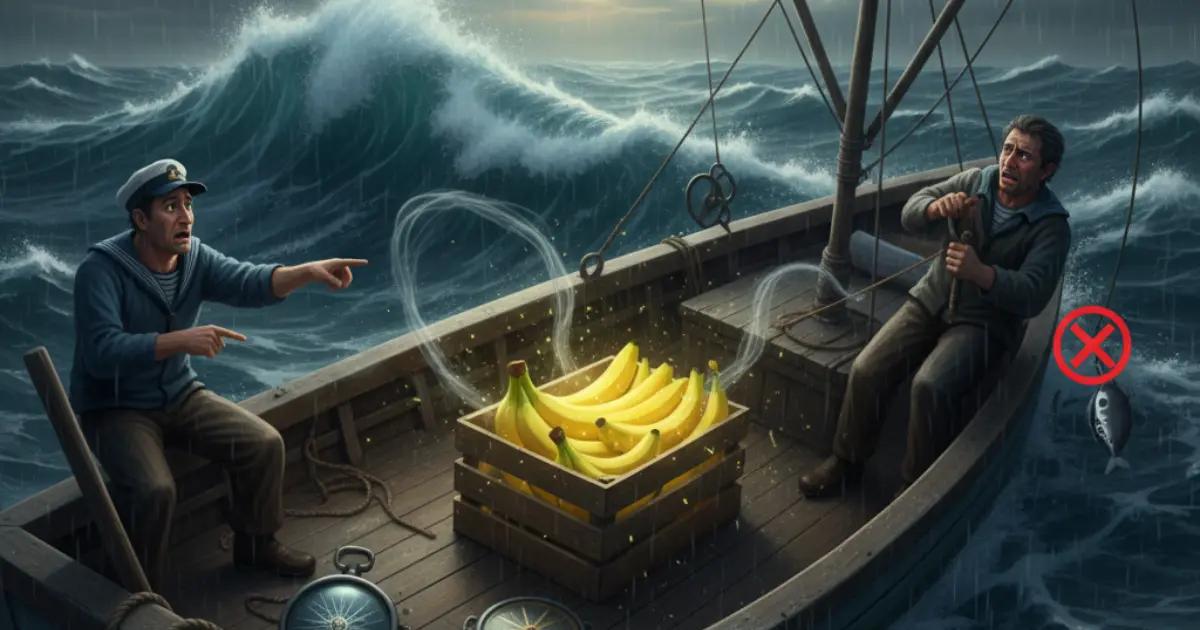
If you’ve ever stepped onto a fishing charter or spent time around experienced sailors, you might have heard a stern warning: never bring bananas on a boat. This maritime superstition has persisted for centuries, and many modern boaters still take it seriously. The belief that bananas are bad luck on a boat isn’t just an old wives’ tale—it has deep historical roots intertwined with real maritime disasters, economic losses, and even some scientific basis. Whether you’re planning a fishing trip or simply curious about nautical folklore, understanding why this superstition exists reveals fascinating insights into maritime history and the psychology of seafaring communities.
The banana boat superstition remains one of the most widely observed maritime traditions today, with some charter captains refusing to allow the yellow fruit aboard their vessels. But where did this belief come from, and is there any truth behind it? Let’s dive into the real story behind why sailors have feared bananas for generations.
The Origins of the Banana Superstition in Maritime History
The superstition that bananas bring bad luck on boats dates back to the 1700s during the height of Caribbean and Atlantic trade routes. Spanish and Portuguese trading vessels regularly transported bananas from the Caribbean islands and Central America to European ports, and these voyages were fraught with danger and misfortune.
Historical records from this era show that ships carrying banana cargo experienced a disproportionately high number of disasters. Many of these vessels disappeared without a trace, were lost in storms, or arrived at port with sick or deceased crew members. The correlation between banana cargo and maritime catastrophe became so pronounced that sailors began refusing to work on ships transporting the tropical fruit.
During the Spanish colonial period, banana trade ships had to sail exceptionally fast to deliver their cargo before the fruit spoiled. This urgency meant captains pushed their vessels harder, often sailing through dangerous weather conditions rather than waiting for safe passage. The combination of speed, risk-taking, and perishable cargo created a perfect storm for accidents and losses.
The superstition spread rapidly through maritime communities as sailors shared stories in ports across the Atlantic. By the 1800s, the belief had become so entrenched that even mentioning bananas aboard some vessels was considered taboo. This oral tradition passed from generation to generation, cementing the banana’s reputation as a harbinger of maritime misfortune.
Why Sailors Believed Bananas Caused Bad Luck
Beyond the historical correlation with shipwrecks, sailors developed multiple specific beliefs about why bananas on boats brought misfortune. These reasons varied by region and era, but several explanations became widespread throughout maritime culture.
One prevalent belief centered on the idea that bananas emitted toxic fumes as they ripened in the ship’s hold. Sailors working below deck reported feeling dizzy, nauseous, or experiencing headaches when surrounded by large quantities of ripening bananas. Some crew members even died in cargo holds, which sailors attributed to the bananas themselves rather than understanding the actual cause—methane and other gases produced during decomposition in poorly ventilated spaces.
Another common explanation involved the dangerous creatures that often accompanied banana shipments. Venomous spiders, particularly the Brazilian wandering spider (one of the world’s most deadly arachnids), frequently hid in banana bunches. Scorpions, snakes, and other tropical pests also stowed away in banana cargo, leading to injuries and deaths aboard ships. When crew members suffered bites or stings, they blamed the bananas for bringing these deadly stowaways aboard.
Fishermen developed their own specific grievances against the yellow fruit. Many believed that having bananas aboard prevented fish from biting, resulting in poor catches and lost income. This belief became so strong that some fishing communities extended the ban to anything banana-related—including Banana Boat sunscreen, Fruit of the Loom underwear (because of the banana in the logo), and even the word “banana” itself.
The slippery nature of banana peels also contributed to the superstition. On the wet, rolling deck of a ship, a discarded banana peel could cause a sailor to slip and fall overboard or sustain serious injuries. In an era before modern safety equipment, such accidents were often fatal, reinforcing the fruit’s dangerous reputation.
The Scientific Explanations Behind the Superstition
While superstition drove much of the fear surrounding bananas on fishing boats, modern science has revealed several legitimate reasons why the fruit caused problems aboard vessels. Understanding these scientific explanations helps separate fact from folklore in the banana boat superstition.
Bananas produce significant amounts of ethylene gas as they ripen, a natural plant hormone that accelerates the ripening process in other fruits and vegetables. In the confined, poorly ventilated cargo holds of historical sailing ships, this ethylene concentration would cause all other produce aboard to ripen and spoil rapidly. Merchants transporting mixed cargo would arrive at port with entire shipments ruined, representing catastrophic financial losses that they attributed to the cursed bananas.
The methane and carbon dioxide gases produced by decomposing organic matter in ship holds created genuinely dangerous conditions. In enclosed spaces with limited air circulation, these gases could displace oxygen, creating an asphyxiation hazard. Sailors entering cargo holds filled with rotting bananas could lose consciousness or die from oxygen deprivation—a very real danger that seemed supernatural to those who didn’t understand the chemistry involved.
Temperature regulation presented another scientific challenge. Bananas require specific temperature ranges to prevent premature ripening or cold damage. Ships sailing through varying climate zones struggled to maintain appropriate conditions, leading to cargo spoilage. The economic pressure to deliver bananas quickly before they rotted meant captains took dangerous risks, increasing the likelihood of shipwrecks and accidents.
From a fishing perspective, there may be some truth to bananas affecting catches. The strong, sweet smell of ripe bananas can permeate a boat, potentially masking the scents of bait or chum used to attract fish. Additionally, the oils from banana peels can transfer to fishing lines and lures, creating an unfamiliar scent that might deter some fish species. While not universally proven, these factors provide a rational basis for fishermen’s concerns.
Real Historical Evidence: Shipwrecks and Banana Cargo
Examining historical maritime records reveals compelling evidence supporting the connection between banana cargo and ship disasters. While not every banana-carrying vessel met with catastrophe, the statistical correlation was significant enough to warrant serious concern among sailors and merchants.
During the peak of Caribbean banana trade in the 18th and 19th centuries, insurance companies noted higher loss rates for vessels carrying banana cargo compared to ships transporting other goods. Lloyd’s of London and other maritime insurers charged premium rates for banana shipments due to the elevated risk profile. These business decisions weren’t based on superstition but on cold, hard actuarial data showing that banana ships were more likely to be lost at sea.
The United Fruit Company (now Chiquita Brands International), which dominated the banana trade in the late 1800s and early 1900s, lost numerous vessels during its operations. The company’s “Great White Fleet” of refrigerated ships represented a technological advancement, but even these modern vessels faced challenges. Several ships disappeared in the Caribbean, and while hurricanes and mechanical failures were often to blame, the banana connection reinforced existing superstitions.
One particularly well-documented case involved the SS Cotopaxi, which vanished in 1925 while carrying a cargo that included bananas. The ship disappeared in the Bermuda Triangle with all 32 crew members, never to be seen again. While the Bermuda Triangle’s reputation is largely myth, the loss of banana-carrying vessels in this region added another layer to the superstition.
Speed-related accidents were extensively documented. Banana boats needed to maintain schedules of 14-15 knots (unusually fast for cargo vessels) to deliver fruit before spoilage. This haste led to collisions, groundings, and structural failures. The SS Prinz Valdemar, though not exclusively a banana carrier, exemplified the dangers of rushing perishable cargo when it capsized in Miami Harbor in 1926, blocking the port for weeks.
How Bananas Affected Fishing Success
The fishing community developed its own intense relationship with the banana bad luck belief, and many charter captains and commercial fishermen still refuse to allow bananas aboard their vessels. This specific application of the superstition has unique characteristics that differ from general maritime traditions.
Sport fishing captains report that the superstition is so strong among their clients that bringing bananas aboard—even unknowingly—can ruin the entire trip’s morale. If the fishing is slow and someone discovers a banana in a cooler, the poor catch gets blamed on the fruit rather than weather, tides, or fish behavior. This psychological effect creates a self-fulfilling prophecy where the presence of bananas becomes an excuse for failure.
Commercial fishermen in various regions have documented correlations between bananas and poor catches, though these observations lack scientific rigor. Some captains claim that days when bananas were aboard resulted in significantly fewer fish, while others noticed no difference. The variability suggests that environmental factors, not bananas, determine fishing success, but the superstition persists nonetheless.
The prohibition has extended to banana-flavored products, banana-branded items, and even yellow clothing on some vessels. Certain fishing charters ban Banana Boat sunscreen, banana nut muffins, and any food containing banana flavoring. Some captains won’t allow crew members wearing Banana Republic clothing or carrying anything with a banana logo. This extreme interpretation demonstrates how deeply the superstition has embedded itself in fishing culture.
Interestingly, some fishermen have developed counter-superstitions to neutralize banana bad luck. These include hiding the banana in a specific location on the boat, wrapping it in aluminum foil, or performing certain rituals before departure. Others believe that banana bread is acceptable because the cooking process transforms the fruit, breaking the curse. These variations show how superstitions evolve and adapt within communities.
Do Modern Boaters Still Believe Bananas Are Bad Luck?
Despite living in an age of GPS navigation, weather radar, and marine safety technology, the belief that bananas are bad luck on a boat remains surprisingly prevalent among contemporary mariners. Surveys of charter captains, recreational boaters, and commercial fishermen reveal that a significant percentage still observe this centuries-old superstition.
A 2019 informal poll of Florida fishing charter captains found that approximately 70% enforce a strict no-banana policy on their boats. Many display “No Bananas” stickers prominently on their vessels, and some include the prohibition in their booking terms and conditions. These aren’t just elderly traditionalists—young captains who grew up with modern technology still respect the superstition, often citing personal experiences where bananas seemed to correlate with poor fishing or mechanical problems.
The superstition has found new life on social media, where boaters share stories of banana-related mishaps. Hashtags like #NoBananasOnBoats and #BananaBoatCurse circulate regularly, with users posting photos of “No Bananas” signs and recounting tales of trips gone wrong after someone smuggled the forbidden fruit aboard. This digital storytelling keeps the tradition alive among younger generations who might otherwise dismiss it as outdated folklore.
Regional variations exist in how seriously boaters take the superstition. In Hawaii, where bananas grow abundantly, the prohibition is less strictly observed, though some traditional Hawaiian fishermen still avoid the fruit. Caribbean charter operations often enforce the ban more strictly, perhaps because the superstition originated in these waters. Pacific Northwest salmon fishermen show mixed adherence, with some captains laughing off the superstition while others take it deadly serious.
Interestingly, recreational sailors and powerboaters tend to be less superstitious about bananas than fishing-focused boaters. Cruising sailors often carry bananas as a healthy, portable snack without incident. This divide suggests that the superstition maintains its strongest hold in communities where success is measured by catch rates rather than safe passage, linking the belief more closely to fishing luck than general maritime safety.
Other Banana-Related Boat Superstitions
The primary banana boat superstition has spawned numerous related beliefs and practices that extend beyond simply avoiding the fruit itself. These derivative superstitions reveal how maritime folklore evolves and expands within seafaring communities.
One widespread belief holds that even saying the word “banana” aboard a vessel can bring bad luck. Some captains enforce this linguistic prohibition as strictly as the physical ban, requiring crew and passengers to refer to the fruit using euphemisms like “the yellow fruit,” “the curved one,” or simply “the forbidden fruit.” Violating this verbal taboo supposedly invites the same misfortune as bringing an actual banana aboard.
Banana-scented products face similar prohibitions on superstitious vessels. Banana Boat sunscreen, despite being one of the most popular marine sun protection brands, is banned on many fishing charters. The irony isn’t lost on captains who enforce this rule, but they maintain that the banana scent alone is enough to trigger bad luck. Some extend this to banana-flavored protein bars, banana nut bread, and even artificial banana flavoring in candy or drinks.
Clothing and accessories bearing banana imagery or the word “banana” also fall under suspicion. Banana Republic clothing, despite having no connection to actual bananas, is sometimes prohibited. T-shirts with banana prints, banana-shaped keychains, and even phone cases with banana designs have been banned from certain vessels. This extension of the superstition into branding and imagery shows how the belief has adapted to modern consumer culture.
Some fishing communities believe that women wearing banana-scented perfume or lotion bring the same bad luck as the fruit itself. This gender-specific variation of the superstition intersects with older beliefs about women being unlucky on boats, creating a compound superstition that some modern captains still observe, though this practice has become increasingly controversial and rare.
Counter-superstitions have emerged to combat banana bad luck. Some fishermen believe that painting a banana on the hull or flying a banana flag actually reverses the curse, turning bad luck into good fortune through a kind of supernatural double-negative. Others claim that eating a banana while still at the dock neutralizes any bad luck before departure. These contradictory beliefs demonstrate the flexible, evolving nature of maritime superstitions.
Should You Actually Avoid Bananas on Your Boat?
The practical question facing modern boaters is whether they should actually observe the no bananas on boats rule. The answer depends on several factors including your boating community, the type of vessel, your passengers’ beliefs, and your own relationship with maritime traditions.
From a purely rational, scientific perspective, there’s no legitimate reason to avoid bananas on modern recreational boats. Contemporary vessels have proper ventilation, refrigeration, and safety equipment that eliminate the historical dangers associated with banana cargo. The fruit won’t cause your engine to fail, your electronics to malfunction, or fish to avoid your hooks through any measurable physical mechanism. If you’re a solo boater or sailing with like-minded rationalists, bringing bananas aboard poses no actual risk.
However, the psychological and social dimensions of the superstition carry real weight. If you’re chartering a fishing boat, hiring a captain, or joining a crew, respecting their superstitions is simply good manners and practical sense. A captain who believes in the banana curse will be distracted and anxious if you bring the fruit aboard, potentially affecting their performance and decision-making. Fellow crew members might blame any mishap on your banana, creating conflict and ruining the trip’s atmosphere.
For charter fishing operations, the business case for banning bananas is clear. Even if the captain doesn’t personally believe the superstition, many clients do, and accommodating their beliefs ensures customer satisfaction. If fishing is slow and clients discover someone brought bananas, they’ll attribute the poor catch to the fruit rather than natural factors, potentially leaving negative reviews or demanding refunds. From this perspective, the no-banana policy is simply good business practice.
Consider the type of boating you’re doing when deciding whether to bring bananas. On a casual day cruise with family, bananas make a perfect healthy snack with no downside. On a serious fishing expedition with experienced anglers, leaving the bananas at home shows respect for tradition and prevents potential conflict. For offshore passages or extended cruising, the nutritional benefits of bananas may outweigh superstitious concerns, especially if your crew doesn’t share the belief.
Ultimately, the decision to avoid bananas on your boat is personal. The superstition has no basis in physics or biology, but it has tremendous cultural and psychological significance within maritime communities. Whether you choose to observe it depends on your values: do you prioritize rational thinking and personal freedom, or do you value tradition, community harmony, and the rich tapestry of maritime folklore? There’s no wrong answer, but understanding the full history and context of the superstition allows you to make an informed choice that respects both science and tradition.
The enduring belief that bananas bring bad luck on boats represents more than simple superstition—it’s a living connection to maritime history, a testament to the power of oral tradition, and a reminder that seafaring remains one of humanity’s most psychologically demanding endeavors. Whether you laugh off the superstition or strictly observe it, the banana boat curse continues to spark conversations, unite communities, and add color to our relationship with the sea.
Frequently Asked Questions
Why are bananas bad luck on a boat?
Bananas are considered bad luck on boats due to several historical reasons dating back to the 1700s Caribbean trade routes. Ships carrying bananas often experienced disasters, crew disappearances, and poor fishing catches. Additionally, bananas release ethylene gas that spoiled other cargo, and venomous spiders hiding in banana bunches caused crew deaths, reinforcing the superstition among sailors.
Is the bananas bad luck boat superstition still followed today?
Yes, many modern fishermen and charter boat captains still refuse to allow bananas on board. This centuries-old superstition remains particularly strong in sport fishing communities, where captains believe bananas cause equipment failures, poor catches, and general misfortune. Some boats even ban banana-flavored products, sunscreen with banana extracts, and clothing with banana logos.
What is the historical origin of bananas being forbidden on boats?
The superstition originated during the 1700s when Spanish and Caribbean trading vessels transporting bananas frequently sank or disappeared at sea. These ships traveled at high speeds to deliver bananas before they spoiled, often sailing into dangerous weather that caused shipwrecks. Fishermen also noticed that boats carrying bananas rarely caught fish, likely because the ships moved too quickly through fishing grounds.
Is there any scientific basis for the banana boat superstition?
There is some scientific validity to the concern about bananas bad luck boat beliefs. Bananas produce ethylene gas, which accelerates ripening and spoilage of other fruits and vegetables, causing cargo losses. Historically, deadly Brazilian wandering spiders and other venomous creatures hid in banana bunches, posing real dangers to crew members during long voyages.
Are bananas banned on cruise ships too?
No, bananas are not typically banned on modern cruise ships, as these large vessels don’t follow the same fishing superstitions as smaller boats. However, some fishing charters and sport fishing vessels strictly prohibit bananas on board. The superstition is most prevalent among serious anglers and professional fishing captains rather than commercial cruise lines.
What other items are considered bad luck on boats?
Besides bananas, sailors consider several items unlucky including women on board (an old superstition), black suitcases, flowers, and saying the word “pig” while at sea. Renaming a boat without a proper ceremony, whistling on deck, and departing on a Friday are also traditionally considered bad luck. Many of these superstitions stem from historical maritime disasters and cultural beliefs passed down through generations.
Can you bring banana-flavored products on a fishing boat?
Most captains who enforce the banana ban also prohibit banana-flavored items including sunscreen, protein bars, and even Banana Boat sunscreen products. Some fishermen take the superstition so seriously that they won’t allow anything with the word “banana” on it aboard. It’s always best to check with your captain before bringing any banana-related products on a fishing charter.
Why did banana boats have poor fishing results?
Banana trade ships historically had terrible fishing results because they traveled at maximum speed to prevent cargo spoilage, moving too quickly for successful fishing. The fast-moving vessels couldn’t troll effectively or spend time in productive fishing areas. This practical explanation became intertwined with superstition, strengthening the belief that bananas themselves caused the poor catches.
What brings good luck on a fishing boat instead of bananas?
Traditional good luck items for boats include dolphins swimming alongside the vessel, a horseshoe nailed to the mast, and pouring wine on the deck before departure. Many fishermen believe in lucky fishing hats, specific colors (especially red), and carrying a silver coin. Performing a proper boat blessing ceremony and respecting the sea are also considered ways to ensure good fortune while fishing.
You May Also Like
How to Ripen Bananas for Banana Bread: Fast & Natural Methods

Benefits of Banana Bread: Is It Healthy or Just Dessert?