Burro Banana Nutrition vs Regular Banana: Real Differences

When you’re standing in the produce aisle comparing burro banana nutrition to regular bananas, you’re probably wondering if that stockier, squatter fruit is worth the extra cost. Burro bananas—also called chunky bananas or horse bananas—have been gaining attention for their unique nutritional profile and lower sugar content compared to the familiar Cavendish banana most of us grew up eating. The real difference between burro banana vs regular banana goes beyond just appearance: these two varieties offer distinct nutritional benefits, different glycemic responses, and varying culinary uses that can significantly impact your health goals.
Understanding the nutritional differences between these banana varieties isn’t just about counting calories—it’s about choosing the right fruit for your specific dietary needs, whether you’re managing blood sugar levels, trying to lose weight, or simply optimizing your nutrient intake. This comprehensive comparison will break down exactly what sets burro bananas apart from regular bananas, backed by nutritional data and practical insights you can use immediately.
What Is a Burro Banana? (Quick Overview)
A burro banana is a short, blocky banana variety with a squared-off shape and ridged edges that make it instantly recognizable compared to the smooth, curved Cavendish bananas dominating grocery stores. Native to Mexico and Central America, burro bananas are also known as “orinoco,” “horse banana,” or “chunky banana” depending on the region. Unlike regular bananas that are typically eaten when fully yellow and soft, burro bananas are often consumed when still green or semi-ripe, offering a firmer texture and less sweet flavor profile.
The flesh of a burro banana is creamier and denser than regular bananas, with a slightly tangy, lemony undertone when eaten raw. This variety has been a staple in Latin American and Southeast Asian cuisines for centuries, valued not just for its unique taste but also for its versatility in both sweet and savory dishes. When you’re searching for burro banana near me or wondering where to buy burro banana, you’ll typically find them in Latin markets, specialty produce stores, or increasingly in the organic sections of larger supermarkets.
The growing interest in burro banana health benefits has pushed more retailers to stock this variety, though availability can still be limited compared to conventional bananas. What makes burro bananas particularly interesting from a nutritional standpoint is their different starch composition and lower sugar content when compared to fully ripe Cavendish bananas—a distinction that becomes crucial for anyone monitoring their carbohydrate intake or blood sugar levels.
Burro Banana vs Regular Banana: Nutrition Facts Compared
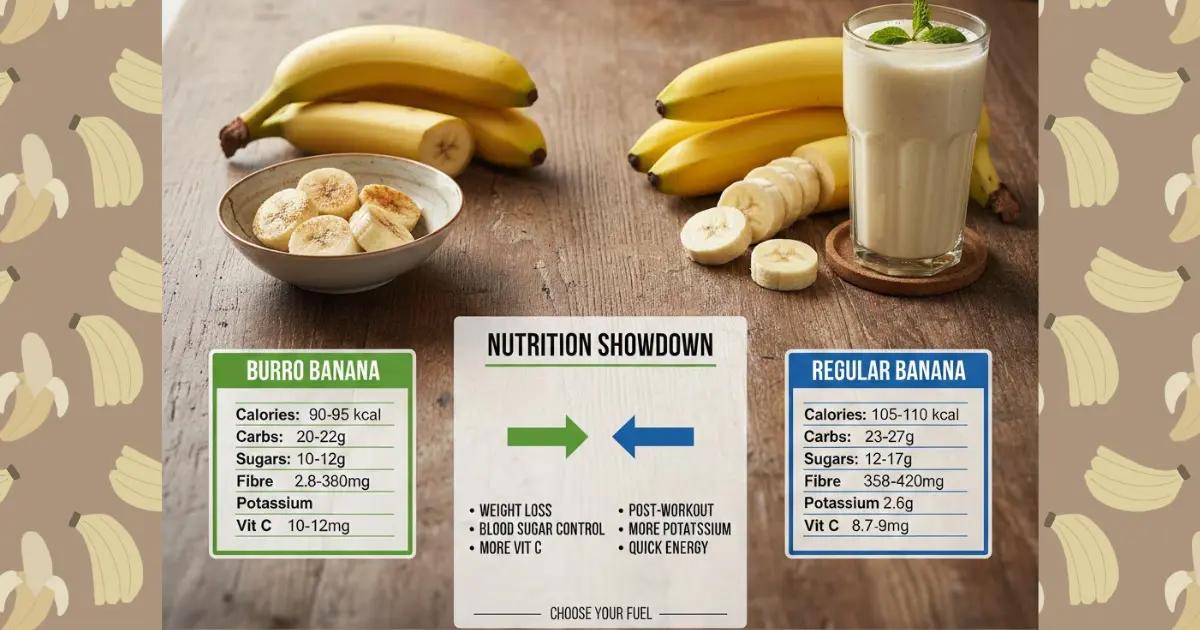
The side-by-side comparison of burro banana nutrition vs regular banana reveals some surprising differences that go beyond what you might expect from two fruits in the same family. Based on standardized nutritional data for 100 grams of each variety, here’s how they stack up:
| Nutrient | Burro Banana (100g) | Regular Banana (100g) |
|---|---|---|
| Calories | 89-92 kcal | 89 kcal |
| Carbohydrates | 22-23g | 23g |
| Sugar | 8-10g | 12g |
| Fiber | 3.2-3.5g | 2.6g |
| Protein | 1.3g | 1.1g |
| Potassium | 380-420mg | 358mg |
| Vitamin C | 15-18mg | 8.7mg |
| Vitamin B6 | 0.4mg | 0.4mg |
The most striking difference in burro banana nutrition facts is the significantly lower sugar content—approximately 20-30% less than regular bananas when comparing fruits at similar ripeness stages. This difference becomes even more pronounced when you consider that burro bananas are often consumed at a greener stage, when their resistant starch content is higher and sugar content even lower. The burro banana calories remain comparable to regular bananas, making the choice between them less about calorie counting and more about the quality and type of carbohydrates you’re consuming.
Another notable advantage in the burro banana nutrition facts 100g breakdown is the higher fiber content. That extra 0.6-0.9 grams of fiber per 100 grams might seem small, but it translates to approximately 25-35% more fiber than regular bananas—a significant boost for digestive health, satiety, and blood sugar management. The green burro banana nutrition profile is even more impressive, with resistant starch levels that can reach 15-20 grams per 100 grams when the fruit is still firm and green.
When examining burro banana nutrition calculator data, it’s important to note that these values can vary based on ripeness, growing conditions, and specific cultivar. However, the consistent pattern across multiple studies shows that burro bananas generally offer a more favorable nutritional profile for those concerned about sugar intake and glycemic response.
Carbohydrates & Sugar Content: Which Is Lower?
The carbohydrate composition is where the burro banana vs regular banana comparison becomes particularly relevant for anyone managing their blood sugar or following a lower-carb eating plan. While total carbohydrate counts appear similar at first glance, the type and structure of those carbohydrates differ substantially between the two varieties.
Burro banana carbs consist of a higher proportion of resistant starch, especially when the fruit is consumed green or semi-ripe. Resistant starch is a type of carbohydrate that resists digestion in the small intestine and acts more like fiber, feeding beneficial gut bacteria and producing less dramatic blood sugar spikes. A green burro banana can contain 15-20 grams of resistant starch per 100 grams, compared to just 4-5 grams in a green regular banana. As the fruit ripens, this resistant starch converts to simple sugars, but burro bananas retain more of their starch structure even when yellow.
The sugar content difference is equally important. Regular Cavendish bananas contain approximately 12 grams of sugar per 100 grams when ripe, with the majority being simple sugars like glucose, fructose, and sucrose. Burro bananas, by contrast, contain 8-10 grams of sugar at comparable ripeness—a reduction of about 17-33%. This lower sugar content contributes directly to the burro banana glycemic index advantage, which we’ll explore in detail in the next section.
For practical application, this means that if you’re eating a medium-sized banana (approximately 120 grams), you’re consuming about 14.4 grams of sugar with a regular banana versus 9.6-12 grams with a burro banana—a difference of 2.4-4.8 grams of sugar per serving. Over the course of a week, if you eat one banana daily, that’s a reduction of 16.8-33.6 grams of sugar, which can make a meaningful difference for those monitoring their sugar intake closely.
The fiber-to-sugar ratio also favors burro bananas. With approximately 3.2-3.5 grams of fiber and 8-10 grams of sugar, burro bananas offer a ratio of roughly 1:2.5 to 1:3 (fiber to sugar), compared to regular bananas’ ratio of approximately 1:4.6. This better ratio means slower digestion, improved satiety, and more stable energy levels throughout the day.
Vitamin & Mineral Differences (Potassium, Vitamin C, B6)
Beyond macronutrients, the micronutrient profile reveals additional advantages in burro banana health benefits that often go unnoticed. While both banana varieties are nutritious, burro bananas edge ahead in several key vitamins and minerals that support overall health.
Potassium content is one area where burro bananas demonstrate a clear advantage. With 380-420mg of potassium per 100 grams compared to regular bananas’ 358mg, burro bananas provide approximately 6-17% more of this essential mineral. The burro banana potassium content is particularly valuable for those using potassium for blood pressure management, as this mineral helps counteract sodium’s effects and supports healthy cardiovascular function. A single medium burro banana can provide up to 500mg of potassium, contributing significantly to the recommended daily intake of 2,600-3,400mg for adults.
Vitamin C is where burro bananas truly shine. With 15-18mg per 100 grams—nearly double the 8.7mg found in regular bananas—burro bananas offer substantially more of this immune-supporting, antioxidant vitamin. This higher vitamin C content makes burro bananas a better choice for supporting immune function, collagen production, and iron absorption. A medium burro banana can provide approximately 20-25% of your daily vitamin C needs, compared to just 10-12% from a regular banana.
Vitamin B6 levels remain relatively comparable between the two varieties, with both providing approximately 0.4mg per 100 grams. This B vitamin is crucial for protein metabolism, neurotransmitter production, and immune function. Both banana types serve as excellent sources, contributing about 20-25% of the recommended daily intake in a single medium fruit.
Other minerals worth noting include magnesium, where burro bananas provide approximately 28-32mg per 100 grams compared to regular bananas’ 27mg—a modest but meaningful difference for those focused on muscle function, bone health, and metabolic processes. The phosphorus content is also slightly higher in burro bananas, supporting bone health and energy production at the cellular level.
The antioxidant profile of burro bananas appears to be more robust as well, though specific data is limited. The higher vitamin C content alone suggests greater antioxidant capacity, but burro bananas also contain beneficial plant compounds like dopamine and catechin in concentrations that may exceed those found in regular bananas, particularly when consumed at the green or semi-ripe stage.
Glycemic Index: Which Banana Is Better for Blood Sugar?
The burro banana glycemic index is perhaps the most compelling reason to choose this variety over regular bananas, especially for individuals managing diabetes, prediabetes, or anyone concerned about blood sugar stability. The glycemic index (GI) measures how quickly a food raises blood glucose levels on a scale of 0-100, with lower values indicating a slower, more gradual rise.
Regular ripe bananas have a glycemic index of approximately 51-60, placing them in the medium GI category. However, this can vary significantly based on ripeness—a very ripe banana with brown spots can have a GI approaching 70, while a greener banana might be closer to 40. Burro bananas, by contrast, typically have a glycemic index of 40-50 when semi-ripe, and can drop to 30-35 when consumed green. This lower GI is attributed to the higher resistant starch content and lower simple sugar concentration.
The glycemic load (GL)—which accounts for both the GI and the amount of carbohydrate in a typical serving—provides an even clearer picture. A medium regular banana (120g) has a glycemic load of approximately 11-13, while a medium burro banana of the same weight has a GL of 8-10. This difference means burro bananas produce a significantly smaller blood sugar spike, making them a better choice for maintaining stable energy levels and reducing insulin demand.
For people with diabetes or insulin resistance, this distinction is crucial. Studies have shown that foods with lower glycemic indices improve long-term blood sugar control, reduce the risk of type 2 diabetes complications, and help manage weight more effectively. The resistant starch in green and semi-ripe burro bananas also acts as a prebiotic, feeding beneficial gut bacteria that produce short-chain fatty acids—compounds that further improve insulin sensitivity and metabolic health.
The practical implication is clear: if you’re choosing between burro bananas vs regular bananas for blood sugar management, burro bananas—especially when consumed at the green or yellow-green stage—offer a superior option. They provide sustained energy without the rapid glucose spike and subsequent crash that can occur with very ripe regular bananas. This makes them particularly valuable as a pre-workout snack, breakfast component, or afternoon energy boost when you need stable blood sugar rather than a quick sugar rush.
Taste, Texture & Cooking Differences
Understanding the culinary distinctions between these varieties helps answer the question of burro banana how to eat and when each type works best in your kitchen. The taste and texture differences are significant enough that they’re not always interchangeable in recipes, though both offer delicious possibilities.
Taste profile: Burro bananas have a less sweet, more complex flavor than regular bananas. When semi-ripe, they offer a subtle tanginess with hints of lemon and apple, along with a creamy, slightly starchy taste. Regular bananas, especially when fully ripe, are distinctly sweet with a pure banana flavor that’s become the standard we expect. As burro bananas ripen fully, they develop sweetness but retain a more nuanced flavor profile that many describe as “banana with character.”
Texture differences: The flesh of a burro banana is denser and creamier than regular bananas, with a firmer structure that holds up better to cooking. Even when ripe, burro bananas maintain more body and don’t become as mushy as regular bananas. This makes them excellent for grilling, frying, and baking applications where you want the fruit to maintain its shape. Regular bananas become very soft when ripe, making them ideal for smoothies, mashing, and recipes like banana bread where a smooth, sweet consistency is desired.
Cooking applications: Burro banana recipe options are incredibly diverse. When green, they can be treated similarly to plantains—sliced and fried to make burro banana fries, boiled and mashed as a starchy side dish, or grilled as a savory accompaniment to proteins. The burro banana vs plantain comparison is relevant here: while plantains are starchier and less sweet even when ripe, burro bananas occupy a middle ground, offering more versatility across both sweet and savory preparations.
Semi-ripe burro bananas work beautifully in curries, stir-fries, and as a potato substitute in various dishes. Their lower sugar content means they don’t caramelize as quickly as regular bananas when cooked, allowing for longer cooking times without burning. Fully ripe burro bananas can be used in smoothies, baked goods, and desserts, though they’ll provide less sweetness than regular bananas—which can actually be an advantage if you’re reducing sugar intake.
For those wondering about burro bananas vs baby banana or burro banana vs thai banana comparisons, it’s worth noting that baby bananas (also called finger bananas) are sweeter and creamier than both burro and regular bananas, while Thai bananas are similar to burro bananas in their versatility but with slightly different flavor notes. Each has its place depending on your culinary goals and nutritional priorities.
Which Banana Is Better for Weight Loss?
When evaluating are burro bananas healthier for weight management specifically, several factors come into play beyond just calorie content. Since burro banana calories are virtually identical to regular banana calories (89-92 kcal vs 89 kcal per 100g), the weight loss advantage comes from other nutritional characteristics that affect satiety, metabolism, and overall dietary adherence.
The higher fiber content in burro bananas (3.2-3.5g vs 2.6g per 100g) contributes to greater feelings of fullness and prolonged satiety. Fiber slows gastric emptying, meaning you feel satisfied longer after eating a burro banana compared to a regular banana. This can reduce overall calorie intake throughout the day by minimizing snacking and helping you reach your next meal without excessive hunger. The resistant starch in green and semi-ripe burro bananas amplifies this effect even further, as resistant starch has been shown to increase feelings of fullness and reduce subsequent food intake.
The lower sugar content and reduced glycemic response of burro bananas also support weight loss efforts. Foods that cause rapid blood sugar spikes followed by crashes can trigger hunger and cravings within a few hours of eating. Burro bananas’ more gradual impact on blood glucose helps maintain stable energy and appetite regulation, reducing the likelihood of overeating later in the day. This metabolic advantage makes burro bananas particularly valuable for those following lower-carb or blood-sugar-focused weight loss approaches.
The resistant starch in burro bananas offers another weight loss benefit: it produces fewer calories per gram than regular starch (approximately 2 calories per gram versus 4 calories per gram). While this difference seems small, it means that a green burro banana with high resistant starch content effectively provides fewer absorbable calories than the nutrition label suggests. Additionally, resistant starch has been shown to increase fat oxidation and improve insulin sensitivity—both beneficial for weight management.
From a practical standpoint, burro bananas’ versatility in savory dishes can help diversify your diet and reduce reliance on higher-calorie starches like potatoes, rice, or bread. Using green burro bananas as a base for “fries” or as a potato substitute in various recipes can significantly reduce calorie density while increasing nutrient intake. Their less-sweet flavor also makes them less likely to trigger sugar cravings or the desire for additional sweet foods.
That said, the best banana for weight loss is ultimately the one you’ll actually eat and enjoy as part of a balanced, calorie-controlled diet. If you find regular bananas more satisfying and they help you avoid less healthy snacks, they’re the better choice for you. However, if you’re looking to optimize your fruit choices for maximum satiety, blood sugar stability, and metabolic benefits, burro bananas offer measurable advantages.
Which Should You Choose? (Final Verdict)
The answer to “what’s the difference between a burro banana and a regular banana” extends far beyond appearance—it encompasses meaningful nutritional distinctions that can influence your health outcomes depending on your specific goals and needs. After examining the comprehensive data, here’s the practical guidance for choosing between these two varieties.
Choose burro bananas if you:
- Are managing blood sugar levels, diabetes, or prediabetes—the lower glycemic index and reduced sugar content make burro bananas the clear winner
- Want to maximize satiety and support weight loss efforts—the higher fiber and resistant starch content provide superior fullness
- Prefer less sweet fruit or want to reduce overall sugar intake—burro bananas offer banana nutrition without excessive sweetness
- Enjoy cooking with bananas in savory dishes—their firmer texture and less sweet flavor make them more versatile
- Need higher potassium and vitamin C intake—burro bananas provide measurably more of these essential nutrients
- Are interested in gut health benefits—the resistant starch in green burro bananas acts as a powerful prebiotic
Choose regular bananas if you:
- Prefer the classic sweet banana flavor and soft texture you grew up with
- Use bananas primarily for smoothies, baking, or recipes requiring very ripe, sweet fruit
- Have limited access to specialty produce—regular bananas are universally available and often more affordable
- Need quick, easily digestible energy for immediate use (such as post-workout recovery)
- Don’t have specific blood sugar concerns and simply want a convenient, nutritious fruit
The ideal approach for most people: Incorporate both varieties into your diet strategically. Use green or semi-ripe burro bananas for breakfast or as snacks when you need sustained energy and blood sugar stability. Reserve regular bananas for post-workout nutrition when you want faster carbohydrate absorption, or for recipes where their sweeter flavor and softer texture are advantageous.
When considering what is the healthiest banana in the world, the answer depends on your definition of “healthy.” For pure nutrient density and metabolic benefits, burro bananas consumed at the green or semi-ripe stage offer advantages in fiber, resistant starch, vitamin C, and glycemic response. However, regular bananas remain an excellent, accessible source of nutrition that has supported human health for generations.
The question of which is better burro banana or plantain depends on your intended use. Plantains are starchier and less sweet even when ripe, making them better for savory cooking applications and as a potato or rice substitute. Burro bananas occupy a middle ground—more versatile than plantains across both sweet and savory dishes, but with better blood sugar management properties than regular bananas.
If you’re wondering where can i buy burro bananas or searching for organic burro bananas near me, start with Latin American markets, Asian grocery stores, specialty produce retailers, and the organic sections of larger supermarkets. As demand increases, availability continues to improve, though you may still need to visit multiple stores or consider online specialty produce suppliers. Some farmers’ markets in areas with diverse populations also carry burro bananas seasonally.
Regarding are burro bananas alkaline, both burro and regular bananas are considered alkaline-forming foods despite their slightly acidic pH when tested directly. Once metabolized, they contribute to alkalinity in the body, making them beneficial for those following alkaline diet principles. Burro bananas may have a slight edge here due to their higher mineral content, but both varieties support alkaline balance.
The bottom line: burro bananas offer measurable nutritional advantages, particularly for blood sugar management, satiety, and micronutrient density. They’re worth seeking out if you have specific health goals related to diabetes management, weight loss, or optimizing your nutrient intake. However, regular bananas remain a perfectly healthy choice for most people, and the “best” banana is ultimately the one that fits your taste preferences, budget, availability, and health objectives. Consider keeping both varieties on hand and choosing strategically based on your needs each day—that’s the approach that delivers maximum nutritional benefit while maintaining dietary satisfaction and adherence.
Frequently Asked Questions
Are burro bananas healthier than regular bananas?
Burro bananas are generally considered healthier for blood sugar management due to their lower glycemic index and reduced sugar content compared to regular Cavendish bananas. They contain more resistant starch, which supports digestive health and provides longer-lasting energy. However, both varieties offer valuable nutrients like potassium, vitamin B6, and fiber, so the “healthier” choice depends on your specific dietary goals.
What’s the difference between a burro banana and a regular banana?
The main differences are in shape, taste, and nutritional composition. Burro bananas are shorter, squatter, and have a blockier shape with a more angular appearance, while regular Cavendish bananas are longer and curved. Burro banana nutrition includes lower sugar content (about 6-8g per 100g versus 12-15g in regular bananas), a tangier, lemony flavor, and a firmer texture that holds up better when cooked.
Are burro bananas the same as regular bananas?
No, burro bananas and regular bananas are different varieties of the same fruit species. While both belong to the Musa genus, burro bananas (Musa acuminata × balbisiana) have distinct genetic characteristics that give them their unique shape, flavor profile, and nutritional composition. Regular bananas typically refer to the Cavendish variety, which dominates global banana production and differs significantly in taste, texture, and sugar content.
Which type of banana is the healthiest?
Burro bananas are often considered among the healthiest banana varieties due to their lower sugar content, higher resistant starch, and superior blood sugar response. Red bananas also offer additional antioxidants, while green (unripe) bananas of any variety provide maximum resistant starch benefits. The healthiest choice for you depends on whether you’re prioritizing blood sugar control, antioxidant content, or digestive health benefits.
How do burro bananas compare to Cavendish bananas nutritionally?
Burro banana nutrition offers approximately 40-50% less sugar than Cavendish bananas, making them a better option for those monitoring carbohydrate intake. Both varieties provide similar amounts of potassium (around 350-400mg per 100g) and vitamin B6, but burro bananas contain more resistant starch, which acts more like fiber in the body. Cavendish bananas are sweeter and provide quick energy, while burro bananas offer more sustained energy release.
Which is better: burro banana or plantain?
Burro bananas and plantains serve different culinary purposes, though both are starchier than regular bananas. Plantains are larger, must be cooked before eating, and contain even more resistant starch than burro bananas. Burro bananas can be eaten raw or cooked and offer a middle ground between sweet Cavendish bananas and starchy plantains, making them more versatile for both snacking and cooking applications.
What’s another name for burro bananas?
Burro bananas are also called chunky bananas, horse bananas (a literal translation of “burro”), or square bananas due to their distinctive blocky shape. In some regions, they’re known as Orinoco bananas or hog bananas. These alternative names all reference either the banana’s sturdy appearance or its traditional use as animal feed in some cultures, though they’re perfectly suited for human consumption.
Which color of banana is the healthiest?
Green (unripe) bananas of any variety are healthiest for blood sugar control and gut health because they contain the most resistant starch and the least sugar. Yellow bananas offer a balance of digestibility and nutrient availability, with moderate sugar content. Brown-spotted bananas are easiest to digest and highest in antioxidants but also contain the most sugar, making them ideal for quick energy but less suitable for blood sugar management.
Are burro bananas good for weight loss?
Yes, burro banana nutrition makes them particularly suitable for weight loss due to their lower sugar content and higher resistant starch, which promotes feelings of fullness and supports healthy metabolism. The resistant starch in burro bananas acts similarly to fiber, feeding beneficial gut bacteria and reducing overall calorie absorption. Their firmer texture also requires more chewing, which can increase satiety compared to softer regular bananas.
Why do some doctors say not to eat bananas?
Some doctors advise limiting banana consumption for people with diabetes, kidney disease, or those taking certain medications because bananas are relatively high in sugar and potassium. However, this advice typically applies to regular Cavendish bananas consumed in excess. Burro bananas, with their lower sugar content and glycemic index, may be a better alternative for those who need to monitor their carbohydrate intake while still enjoying the nutritional benefits of bananas.
You May Also Like

Are Strawberry Banana Smoothies Healthy? Complete Guide 2026

Why Avoid Bananas During Pregnancy? Safety Guide 2026